
SASSA Foster Care Grant Requirements, Eligibility and Application Process
The Foster Care Grant is a social support program managed by the South African Social Security Agency (SASSA). It is designed for caregivers who have legal custody of children placed in their care by a court order. The grant is intended to cover day-to-day and developmental expenses until the child reaches 18 years of age or is legally adopted.
The grant strengthens family-based care and reduces reliance on institutional settings. In 2026, the grant amount and application process have been updated to reflect current economic conditions and to streamline access for eligible households.

Who Is Eligible for the Foster Care Grant
Eligibility is based on legal responsibility, residency, the child’s age, and the presence of a court order placing the child in your care. The main requirements are as follows:
Legal Responsibility and Relationship
To qualify, you must be a court-appointed foster parent or caregiver. The court order specifies why the child cannot remain with their biological parents, which may include orphanhood, abandonment, abuse, or neglect. Without a formal court order, the application cannot proceed.
Citizenship, Refugee Status, and Residency
Both the caregiver and the foster child must reside in South Africa. Caregivers may be:
- South African citizens
- Permanent residents
- Recognized refugees or legally permitted residents
This ensures that the grant supports households with a permanent presence in the country.
Age of the Child
The foster child must be under 18 years old. Once the child turns 18 or is legally adopted, the grant ceases unless another qualifying arrangement exists.
Full-Time Care Requirement
The caregiver must act as the primary caregiver, managing daily responsibilities including schooling, nutrition, healthcare, and emotional support. Casual or temporary care does not meet eligibility requirements.
Unlike other social grants, the Foster Care Grant is generally not means-tested, as it focuses on the child’s welfare rather than household income.
Grant Amount in 2026
In 2026, the monthly Foster Care Grant is set at:
- R1,250 per child per month
This amount helps caregivers cover essential expenses such as food, clothing, school fees, transport, and healthcare. If a household fosters more than one child, each child is eligible for the full grant individually.
Required Documents for Application
Having the correct documents is essential to avoid delays or rejection. You should prepare:
- Your bar-coded South African ID (13 digits) or refugee permit
- The child’s birth certificate or alternative identification
- Court order placing the child in your care
- Proof of residence, such as a municipal account or utility bill
- Proof of bank details if payment will be via bank deposit
- Affidavits if official documentation is unavailable
Additional documents may be requested depending on your personal circumstances or verification requirements.
Step-by-Step Application Process
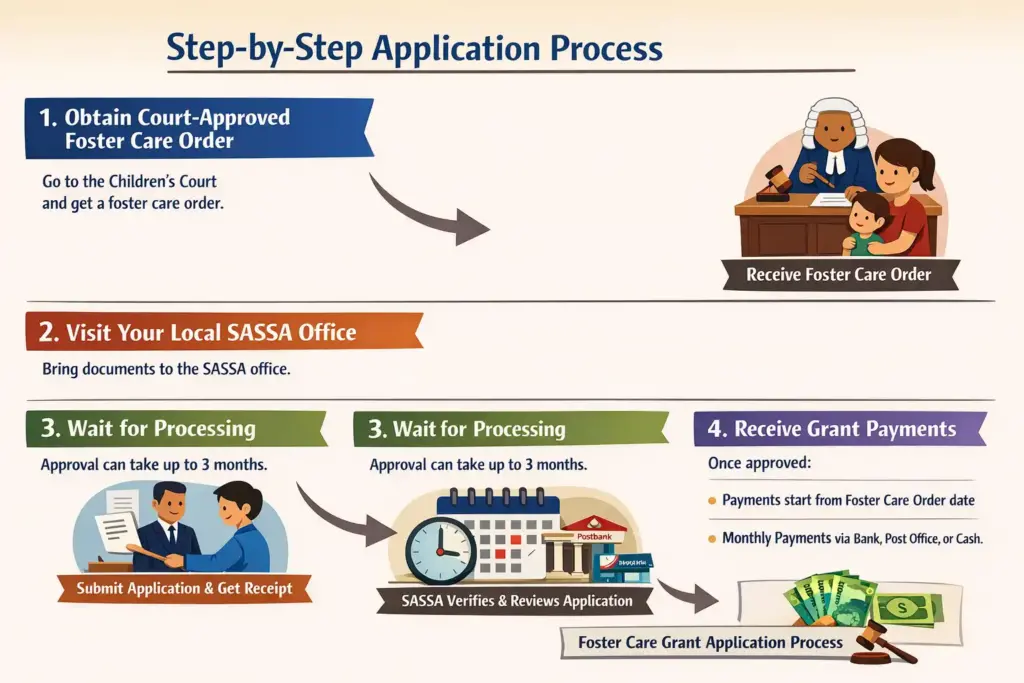
Applying for the Foster Care Grant involves a combination of court processes and direct interaction with SASSA.
1. Obtain Court-Approved Foster Care Order
Start by approaching the Children’s Court with evidence of the child’s circumstances. Once the court issues a foster care order, you can apply for the grant.
2. Visit Your Local SASSA Office
Bring your documents to a local SASSA office. A SASSA official will provide the application form, assist in completing it, and verify your documents. Your fingerprints may also be taken. Once submitted, you receive a dated receipt as proof of application.
3. Wait for Processing
Approval can take up to three months, during which SASSA verifies documentation, legal status, and eligibility. Stay in communication and provide any additional information requested.
4. Receive Grant Payments
Once approved, the grant payments typically:
- Begin from the date the foster care order was issued
- Are paid monthly through your chosen method (bank deposit, Postbank, or cash collection)
Common Mistakes That Delay or Block Approval
Even if you meet eligibility requirements, certain mistakes can slow the process:
- Incomplete or incorrectly filled forms
- Missing or expired supporting documents
- Lack of a current court order or pending renewal
- Incorrect proof of residence or identity errors
Always double-check documentation and consult a SASSA official before submitting your application.
Appealing a Declined Application
If your application is denied, SASSA will provide written reasons. You have 90 days to appeal. Successful appeals usually involve:
- Submitting additional evidence
- Clarifying discrepancies
- Attending an appeal interview if requested
Many denials are overturned with minor documentation updates.
Frequently Asked Questions
1. Can I apply online for the Foster Care Grant?
No. Applications must be submitted in person at a SASSA office with full documentation.
2. Can I receive the grant for more than one child?
Yes. Each eligible foster child in your care receives a separate monthly grant.
3. What happens when the child turns 18?
The grant ends once the child reaches 18, or earlier if care arrangements change.
4. Is there a means test for this grant?
No. Eligibility is based on legal foster care status, not household income.
5. How long does approval take?
Approval can take up to 90 days while SASSA verifies documentation and eligibility.
6. Can foreign nationals apply?
Yes. Legal refugees or permanent residents who meet all requirements can apply.
Conclusion
The SASSA Foster Care Grant continues to provide essential support for caregivers and children across South Africa. Understanding eligibility, preparing the correct documentation, and following the application process carefully are key to receiving timely assistance. By staying informed and proactive, caregivers can secure the resources necessary to provide stable, nurturing care and give every foster child the chance to thrive. This grant remains a critical lifeline that empowers families, strengthens child development, and contributes to long-term social stability in 2026.